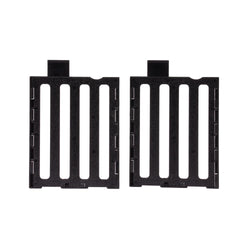
Features
-
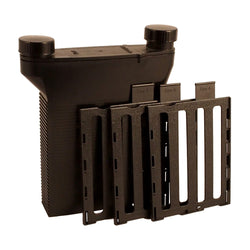
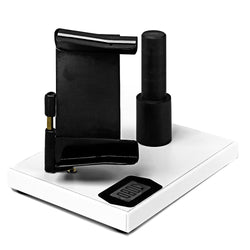
Fast and reliable scanning of 4x5 sheet film
Scans 4x5 film with FULL borders!
Keeps film incredibly flat for optimal sharpness by using 2 sheets of ANR glass
Can be used to scan short strips or single frames of 35mm or 120 film
Product Details
Negative Supply exists to create tools for film photographers who want to spend more time photographing and less time scanning. Their products allow you to digitize negatives using your digital camera and a macro lens in just a few minutes.
Scanning 4x5 inch sheet film has always been time consuming with flatbed scanners and very expensive with drum scanning options. The Negative Supply Basic 4x5 Sheet Film Scanning Kit provides a cost effective and high quality method to scan 4x5 film at home in conjunction with any of Negative Supply's 4x5 light sources (not included). This kit can also be used to scan short strips or single frames of 35mm or 120 film, for which the 35mm and 120 film carriers are not optimized.
Includes:
-
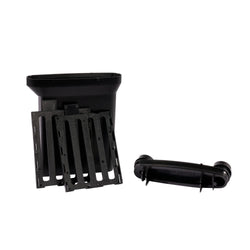
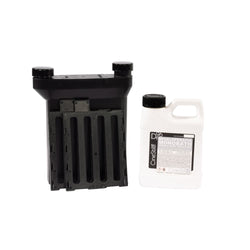
4x5 Film Holder
-
2x sheets of 4.25 x 5.25 micro-etched acrylic
-
4x5 Film Holder Adapter, compatible with the 4x5 Light Source Basic, 4x5 Light Source Basic MK2, and 4x5 Light Source Pro (light source not included in kit)
Camera Scanning Considerations:
Camera Body
Just about any semi-modern, interchangeable-lens digital camera will work great for camera scanning. There are many mirrorless or DSLR options to choose from with large lens catalogs, tethered capture capability, and excellent image quality. Some high end cameras can even use pixel stitching to deliver extremely high levels of resolution.
Macro Lens
For camera scanning, the one real requirement is that your lens focuses close enough to capture the entire frame. For full frame cameras and capturing 35mm film, the term “1:1” designates a lens that will reproduce the 35mm frame exactly onto the full frame digital sensor. With crop-sensor bodies, 1:1 lenses focus even closer. Outside of reproduction factor (1:1), also look out for lenses that are sharp, have good color reproduction, limit internal reflections (modern coatings), and have very little vignetting. Finally, it’s generally best to use your macro lens stopped down 2-3 stops from wide open, as this gives a good combination of depth of field and sharpness.
Software for Negative Conversion
There are several plugins and standalone programs for converting digitally captured negatives into positive images. Most of the options presented here allow you to download a demo version to try before you buy and determine which one best suits your workflow.