News
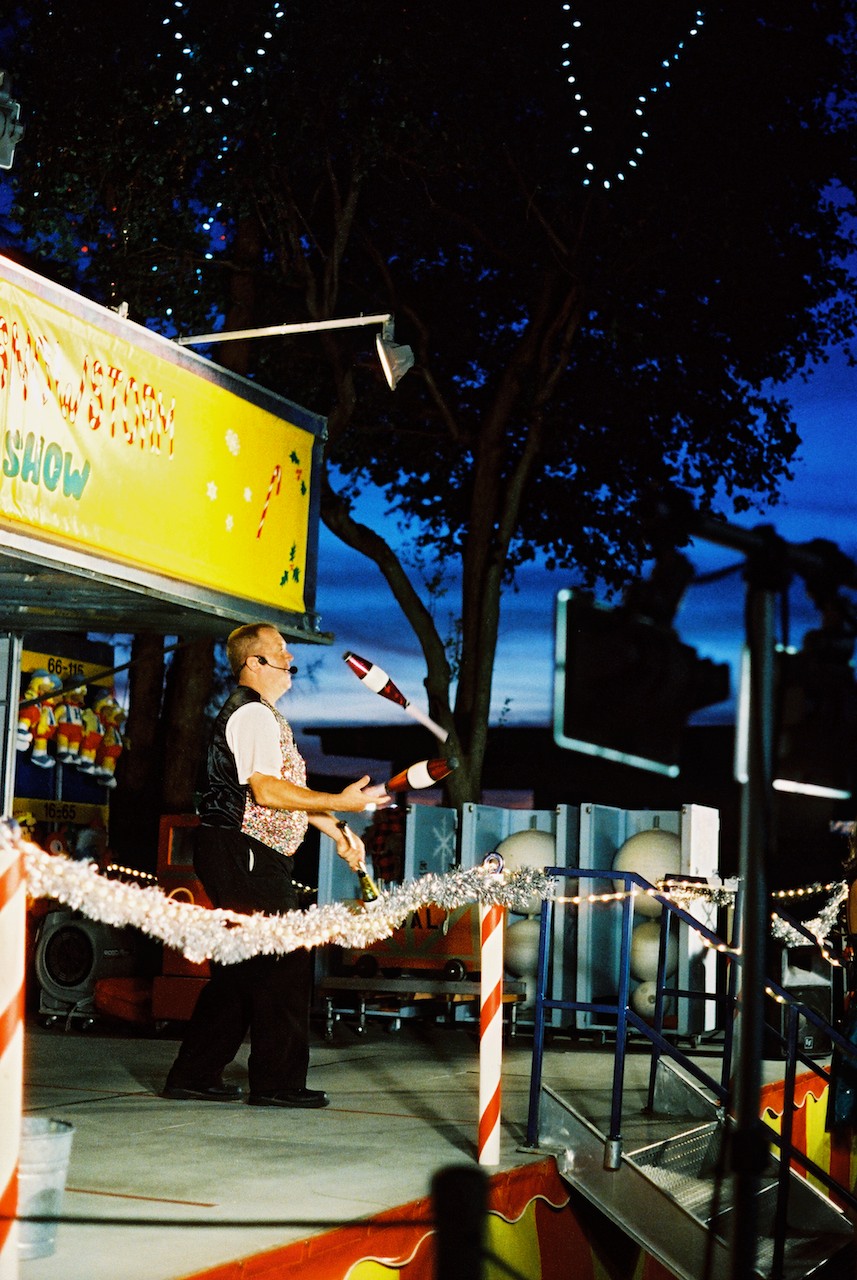
CineStill Rocks! - Bret Michaels on 800T by Fabio Ventura
Posted by CineStill on

"I have photographed Rock concerts on film for while now, and no other 35mm color film I have used comes close in latitude and tonality. I have used Portra 400 & 800, as well as fujifilm Superia 1600. Cinestill wins every time."
~Fabio Ventura
~Fabio Ventura


Lab scans are from Indie Film Lab, on Fuji Frontier SP3000, shot at 1000iso, dev +1.
My request of them is pretty...
Read more →
Synchronized film speed exposure test - Fujifilm Pro400H | Fujifilm Superia 800 | Kodak Portra 800 | CineStill 800Tungsten
Posted by CineStill on
We wanted to do a real world test of the best ISO rating of CineStill in Tungsten light. So we built a rig that synchronized 4 Nikon cameras with 50mm lenses on them, in order to test 4 great film stocks rated at different ISO's. Though CineStill is natively an EI500 film, we expected it to to prove comparable to an ISO800 film in low light. As a low end control we also threw in a roll of...
Read more →
CineStill Silver
Posted by CineStill on

Read more →
CineStill is ALIVE!
Posted by CineStill on
We are now selling the amazing technology of motion picture film, prepped and rolled for still photography on ETSY! Thank you all initial pre-order customers for your patience. The official release date for Cinestill 500Tungsten is March 11th, 2013.
Our very custom Premoval (patent-pending) process makes motion picture ( ECN2 / ECN-2 ) film safe to process in standard C-41 photo lab chemicals or at...
Our very custom Premoval (patent-pending) process makes motion picture ( ECN2 / ECN-2 ) film safe to process in standard C-41 photo lab chemicals or at...
Read more →
Beta test of 500T, P400, & P800 pushed in tungsten light
Posted by CineStill on
P400 vs 500T vs P800 rated at EI 800 and underexposed a stop.


Portra400 pushed 2 stops to 1600 vs CineStill 500T pushed 2 stops to 2000


CineStill 500T pushed 2 stops to 2000 vs Portra800 pushed 1 stop to 1600


CineStill 500T at EI 800ish, normal processing. Dimly lit bar. Leica M2 Nokton 35mm 1.2


Read more →
Beta test exposure bracketing 500Tungsten
Posted by CineStill on
Mixed tungsten and gloomy window light, general in camera meter. Full stop bracketing. No push processing in standard C-41 machine. Scanned on a Fuji Frontier SP2500 w/ minor correction.
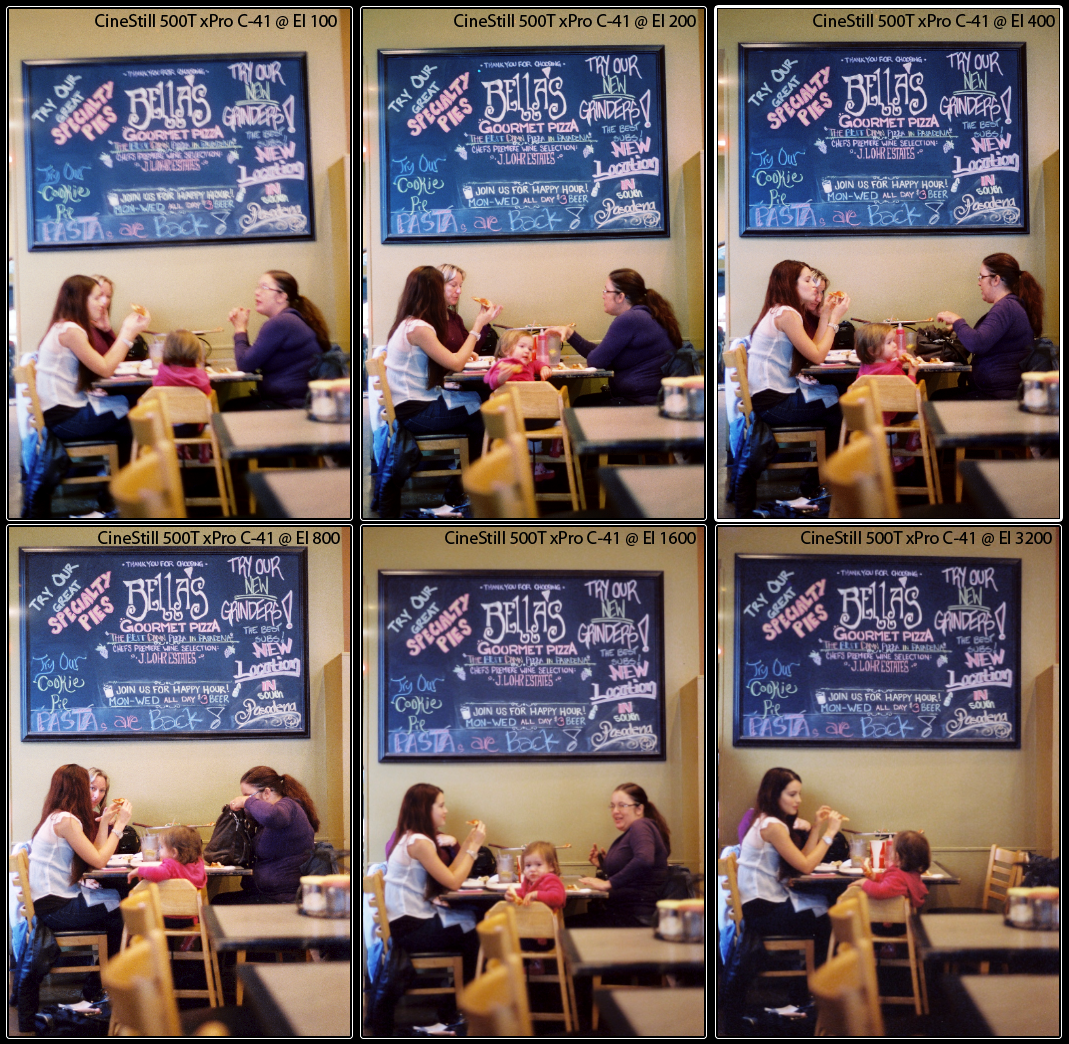
100%crop from the same scene so you can see how exposure effects grain.

Very cool overcast light on a rainy day in L.A. from EI 100-6400 no push, no filter, ugly image of boring building (pretty much as bad as it...
Read more →
Beta test of 500T & P800 in tungsten light
Posted by CineStill on
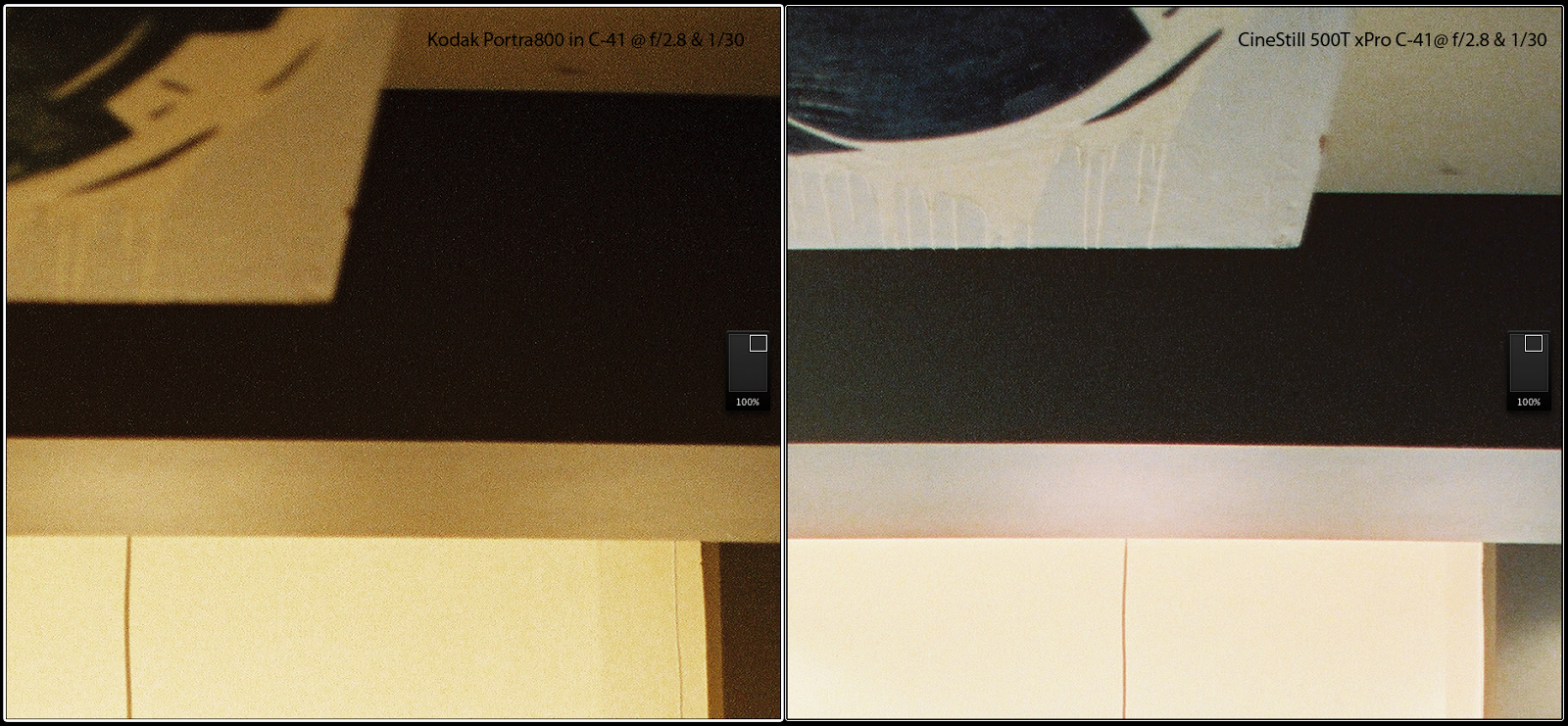
This is our fist side by side analysis once we perfected Premoval. CineStill 500Tungsten xPro C41 alongside Portra 800 normal processing, straight scan, 100%. The original 500T in ECN2 chemicals had bit more pronounced shadow grain than the CineStill in C-41, but nearly identical latitude and color balance.

Read more →
Riccis Valladares' Beta Carnies
Posted by CineStill on